Found in Translation
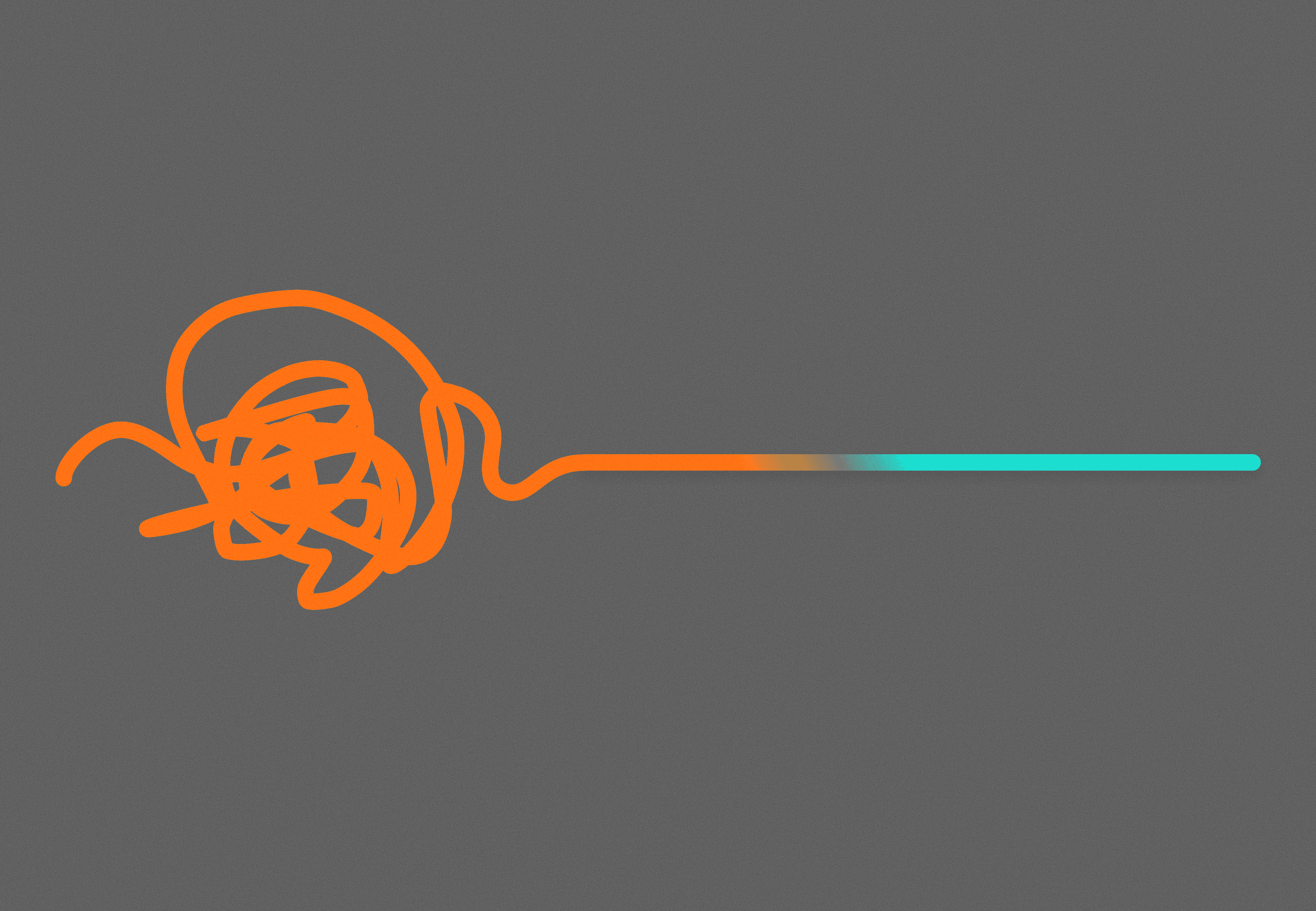
AI can generate almost anything now. Layouts, headlines, full page flows. It can crank out more options in an afternoon than a small team used to produce in a week.
But here's what I've learned the hard way: options aren't solutions. And if anything, the flood of options just makes the real problem more obvious.
Somebody still has to make sense of it all.
The Startup That Couldn't Tell Its Own Story
A couple of years ago, I was working with a startup client. Complicated product, big market opportunity, money being raised — the whole deal. They came to us and said, "We need a website."
Simple enough, right?
Except there were several stakeholders involved, and every one of them had a different idea about what the website needed to do. The business priorities were shifting from week to week. And so every concept I brought to the table landed with a thud.
Not because the work was bad. Because nobody could agree on what the work was supposed to say.
It turned into a grind — me trying to tell a story they couldn't tell themselves. After a couple rounds of this, I stopped. I told them we needed to go back to the strategy drawing board before we touched another layout or headline.
So that's what we did. We spent real time talking through their business strategy — who they were actually serving, what problem they were actually solving, what mattered most right now versus six months from now. And it worked. Once the thinking was clear, the messaging clicked. The website clicked. I think it even helped them sharpen their business beyond the website.
But that project taught me something I already knew and keep relearning: you don't have a concept problem until you've solved the clarity problem first.
Nobody Wants to Do This Part First
Most people want to jump straight to the fun stuff — the concepts, the designs, the copy. But good work doesn't start there.
The request always sounds straightforward. "We need a new website." "We need sharper messaging." "We need a rebrand." But underneath that, the offering is fuzzy. The value prop is muddy. Different people inside the company have completely different answers to what the business actually is.
You can spot it when you've done enough reps. And at that point, you don't have a creative problem. You have a clarity problem. And no amount of AI-generated options are going to fix that for you.
Once It's Clear, Now You Can Build
Once the business actually makes sense — to the team, not just to the founder — then you can build a real concept. Not "let's try a few directions and see what sticks." A clear angle you can build everything around.
And this is where AI gets incredibly powerful. When the concept is locked, AI can generate variations instantly. It can expand messaging, sketch structures, explore layouts in minutes. It gives you range and speed on demand.
When the concept isn't clear? AI mostly gives you polished versions of confusion. It will happily generate ten different ways to say the wrong thing.
Speed Is Only a Gift When the Direction Is Right
Once clarity and concept exist, AI makes the middle of the process way faster. It cuts production time. It lets you test directions without burning a week. It helps you explore without committing prematurely.
But it doesn't replace the hard parts. The real thinking. The focused intention. The part where someone has to sit with the messy reality of a business and translate it into something that actually communicates.
If anything, AI raises the bar. When generation is easy, you can't hide behind effort anymore. The work just has to make sense.
Refinement Is Where Humans Earn Their Keep
AI can generate all day. But knowing what to keep, what to cut, what to tighten, and what to throw away — that's still a human job.
It's recognizing when something feels generic. Seeing where messaging falls apart under scrutiny. Knowing when to push for a stronger angle instead of accepting the first decent draft.
That doesn't come from reading a thread about prompts. It comes from reps. Years of positioning conversations. Watching what lands and what doesn't. Sitting in the room when a client says, "That's it," and knowing why that one worked.
AI gives you raw material fast. Humans shape it into something that actually means something.
So What's the Real Job Now?
Most businesses don't have an output problem anymore. They can generate drafts and "pretty good" work all day long.
What they need is someone to lead. Someone who can translate a messy situation into a clear direction, then keep the whole project centered on that direction as decisions stack up — messaging, structure, design, priorities, tradeoffs.
That's how you get work that performs, not just work that exists.
AI speeds up generation. It gives you range. It makes iteration cheaper. But somebody still has to set the direction, make the calls, and keep the work coherent from first idea to finished product.
That translation layer? That's the gig.
See also